


By: Chris Felico
The Boston Red Sox are spiraling, and fans hoping for salvation from the farm system are being handed another painful reality check: No prospect is saving this team.
Not Kristian Campbell. Not Marcelo Mayer. Not Roman Anthony.
Campbell, who looked like a rare bright spot early in his call-up, came out of the gates hitting well over .300. Now? He’s plummeted to a .224 average, his swing looking more lost by the day. Mayer, the highly touted No. 6 overall prospect in MLB, went 2-for-8 with three strikeouts in his first two games—not bad, not great, but certainly not the kind of jolt the Red Sox need to overcome their fundamental flaws. Anthony, still in development, represents hope in theory—but even if he arrives tomorrow, the team’s structural rot makes it hard to see him thriving in this environment.
The truth is, this isn’t about the kids. It's about the front office’s guiding philosophy.
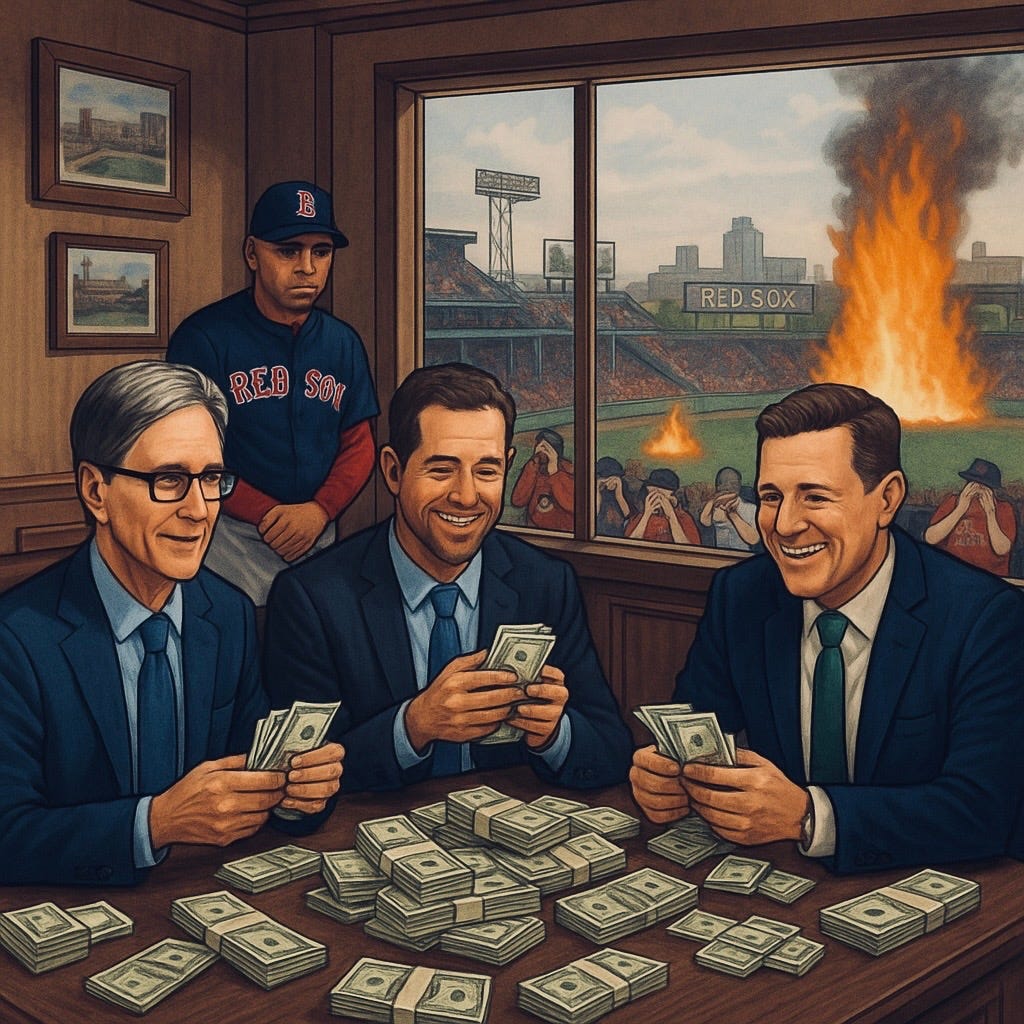
Five years ago, the Red Sox made a conscious decision to pivot from perennial powerhouse to financial minimalist. From the team that used to outspend and outsmart its rivals, they’ve morphed into a franchise acting like a mid-market club with a trust fund. The sale of Mookie Betts wasn't an anomaly—it was a mission statement.
The Red Sox didn’t just trade away a generational talent. They embraced a new identity: The Boston Beancounter Red Sox.
Instead of leveraging their big-market might to build sustainable, championship-caliber rosters, Boston opted to bet everything on internal development and value contracts. It’s an approach that might work for the Rays or Guardians, who have no other choice—but for a franchise with deep pockets, a rabid fan base, and a history of excellence, it's unforgivable.
The result? A revolving door of prospects being asked to do too much, too soon, while a roster riddled with patchwork veterans and overextended role players fails to hold the line.
This philosophy hasn’t just hindered the on-field product—it’s repelled top-tier executive talent. You think it’s a coincidence that high-profile names continue to pass on the Red Sox’s top front office jobs? Why would a proven baseball architect want to sign up to run a so-called big-market club with a small-market leash?
And so the Red Sox continue to operate in this maddening purgatory: not bad enough to bottom out and rebuild fully, not bold enough to contend. Just stuck. Forever asking for patience while letting others raise banners.
Meanwhile, the Yankees add depth. The Dodgers sign stars. The Mets burn cash trying. The Red Sox? They promote another 22-year-old and hope he fixes everything.
It’s not fair to the prospects. It’s not fair to the fans. And it’s not going to work.
This flawed methodology—this allergic reaction to ambition—won’t end until it’s ripped out of the walls of Fenway Park. No amount of player development can paper over the philosophical rot that starts at the top.
Enough is enough.