


By Chris Felico
The Boston Red Sox are nothing if not unpredictable. Two weeks ago, they were scoring touchdowns on the Yankees in a weekend slugfest. Then they were silencing those same Yankees into a historic tailspin. Now, they’ve taken Game 1 against the San Francisco Giants—and Rafael Devers—in a game that had just about everything except consistency.
And yet, they keep winning.
The Red Sox beat the Giants 7–5 in Friday night’s series opener at Oracle Park, pushing their record to 40–37 and pulling within four games of the AL East lead—a place no one realistically thought they’d be in after trading their franchise player less than a week ago.
But how they’ve gotten here has raised more eyebrows than endorsements.
Chaos Wins: The Red Sox Edition
Boston’s recent stretch has played out like a weekly identity crisis. Two weekends ago, it was a 27–20 three-game slugfest over the Yankees at Fenway. It was thrilling, chaotic baseball—and also completely unsustainable. Then came a tighter, more composed series win against the Rays, which featured a blend of offensive surges and pitching duels, hinting at some form of stability.
But the real turning point may have come in the sweep of the Yankees the following week. The Red Sox shut down New York in back-to-back-to back games and allowed just four run over the entire series, including a shutout in game 3 of the series—with Rafael Devers in the lineup. That sweep kickstarted a stunning collapse for the Yankees, who would go on to not score a run for 29 straight innings, spanning from Fenway Park to Yankee Stadium against the Angels.
Then came Seattle—Boston’s first test without Devers.
They won the series, but it didn’t feel convincing. The offense cooled. Walker Buehler got lit up. The Red Sox won low-scoring, tight games, grinding out wins but not instilling much confidence that their new formula was built to last.
Still, the team keeps answering the bell.
Game 1 vs Devers: All Eyes on the Reunion
Friday night’s opener against San Francisco felt like a different kind of challenge. It was Boston’s first look at Rafael Devers in orange, just days after the trade that sent him west for Jordan Hicks, Kyle Harrison, and two prospects.
And it didn’t take long for drama to find the game.
Boston fell behind 3–0 early, in part due to defensive mistakes from David Hamilton, who booted a pair of routine plays. Hunter Dobbins—sharp in his last two outings—didn’t have his best stuff. He battled through 5 innings but dealt with an inconsistent strike zone, as both check swings and borderline calls consistently fell in San Francisco’s favor.
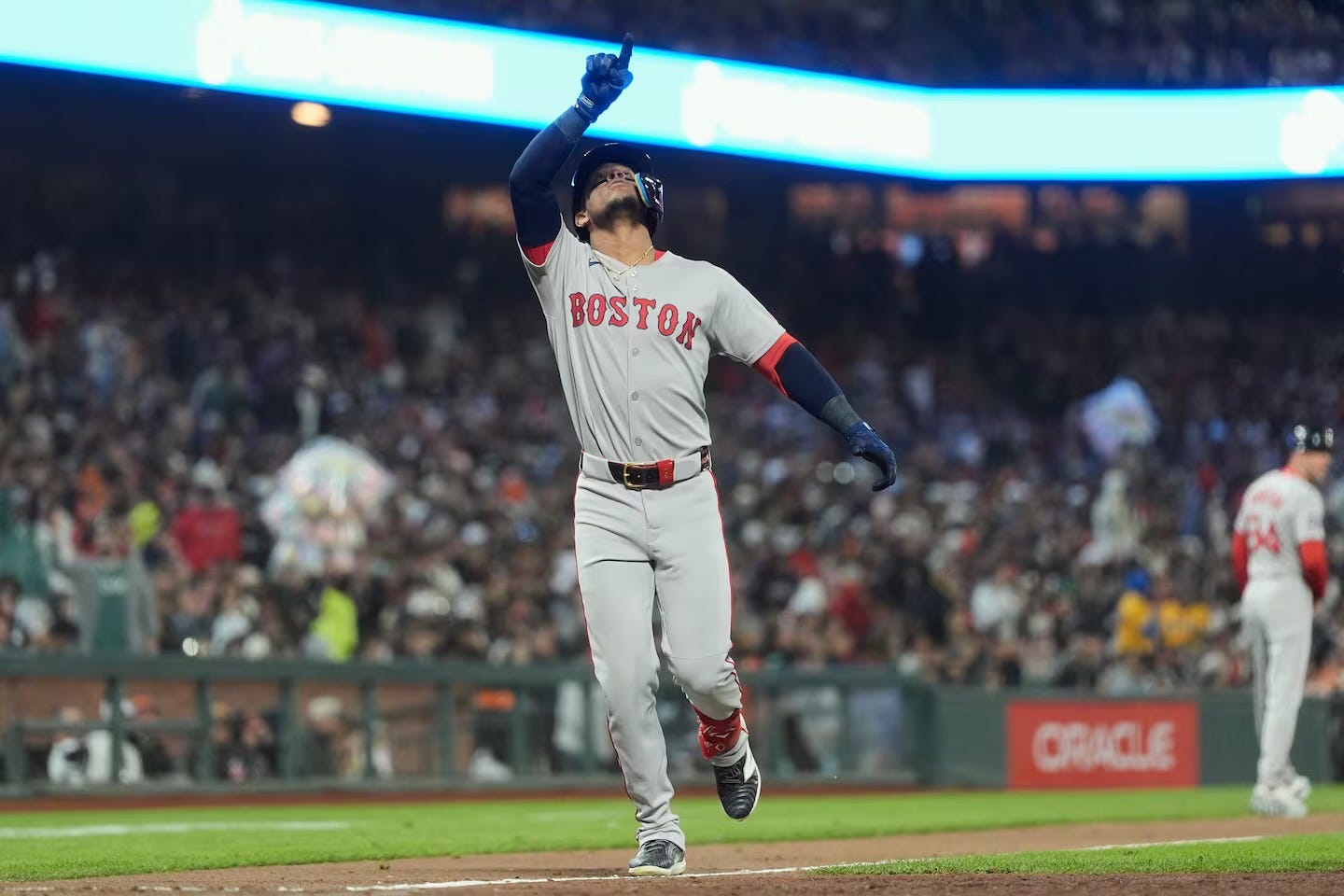
But just as the game began to drift, Cedanne Rafaela ignited the offense, falling a triple shy of the cycle in a breakout night at the plate. The Red Sox rallied for seven runs, aided by clutch swings from Rafaela, Roman Anthony, Jarren Duran, David Hamilton, and Wilyer Abreu (in his first game back in the Majors after an IL stint), and held on late despite bullpen shakiness.
Meanwhile, all eyes were on Devers—and the result was poetic.
The former face of the franchise went 0-for-5, including a strikeout for the second out in the ninth against none other than Aroldis Chapman, his old Red Sox teammate. Chapman has largely dominated Devers throughout their matchups (with the exception of that memorable homer in Yankee Stadium in 2017), and Friday night was no different.
If Game 1 was a symbolic face-off, the Red Sox came out ahead.
Sustainable? No. But They’re Winning.
There’s no denying the inconsistency in how Boston has stacked wins lately. Sometimes they slug their way out of holes. Sometimes they lean on pitching and tight defense. Other times, they seem to be held together by duct tape and Cedanne Rafaela’s cleats.
But they are winning.
With the Yankees spiraling, the Rays stagnating, and the Blue Jays treading water, the Red Sox have quietly climbed into relevance—and now sit just 4 games back in the AL East.
And so the question must be asked:
Even without a truly consistent or sustainable blueprint, can the Red Sox actually make a run for the division?
On paper, it still feels like a long shot. The offense isn’t explosive without Devers. The starting rotation has its cracks. The bullpen remains volatile. And yet… this team shows fight. They find ways to win, even if those ways shift nightly.
The Red Sox are imperfect. They’re unpredictable. But they’re alive—and climbing.
So maybe sustainability doesn’t look the same in Boston this year. Maybe it’s not about dominating one way. Maybe it’s about surviving every way.
If they keep doing that, they won’t just be a Wild Card threat—they might be something more.