


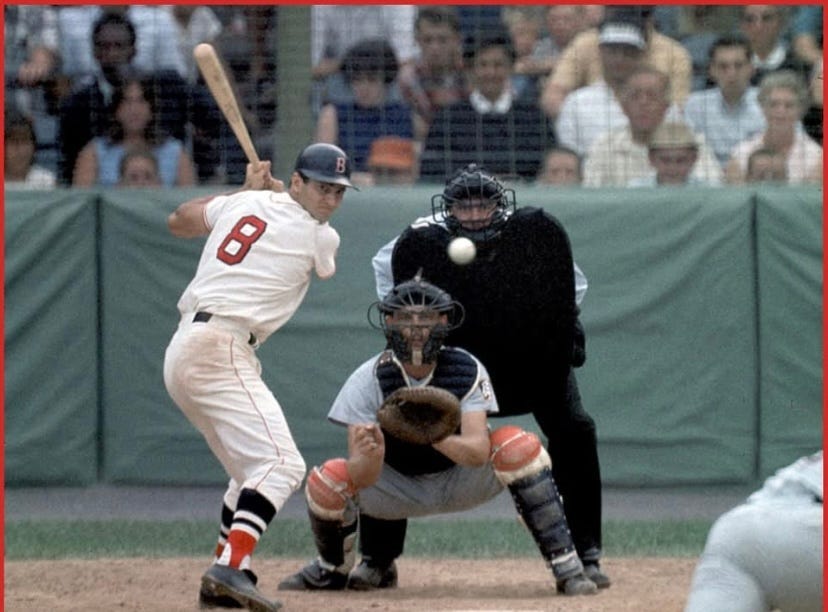
OK let’s get this out of the way right quick. It’s RBIs. An RBI is a run batted in, so if you have more than one run batted in, it’s RBIs. See how that works? Begrudgingly, I agree with Aaron Boone on this topic.
The RBI was invented sometime in the late 19th century and used unofficially until 1920, when it became an official MLB statistic. Over the next 80 years, it was seen as a measure of clutch, that elusive quality of a hitter being a “run producer.” It was “ducks on the pond” thinking, that term that your Little League coach would yell to you when you were at the plate. If there are men on base, it’s the hitters’ job to drive them in. That is mostly correct, but does the hitter completely control the outcome?
I think this is where the Bill James types saw the flaw. If a hitter gets a hit with a runner on second and that runner doesn’t score or gets thrown out, the hitter does not get an RBI, but didn’t he do his job? What about if he hits a sacrifice fly and the runner gets thrown out? Again, the hitter did his job. Also, unless you hit a home run, there needs to be runners on base for you to get an RBI. This is typically dependent on your place in the batting order. A third, cleanup, or fifth hitter will get many more RBI chances than a 9 hitter. I think James saw this as an uneven playing field.
This led to the rise of statistics like WAR, OBP, and SLG. Getting on base became much more important. Billy Beane started a viral trend which is now part of the baseball fabric. Slugging is not just about home runs. Doubles and triples count too and typically drive in lots of runs. The hitter is 100% responsible for everything that goes into those statistics and doesn’t need to rely on anyone else.
Now please allow me one painful digression and I will wrap up my thoughts on RBIs.
The RBI statistic led to one of my worst childhood baseball experiences. In 1979, both Fred Lynn and Jim Rice were chasing the Triple Crown, defined as leading your league in batting average, home runs, and RBIs. These were the three horsemen of hitting performance. Carl Yastrzemski won it in 1967 and no one except Miguel Cabrera (2012) has done it since. In ’79, Lynn won the batting title (Rice 4th), Gorman Thomas the HR title (Lynn & Rice 2nd), and Don Baylor the RBI title (Rice 2nd, Lynn 4th). This is how the AL MVP voting shook out:
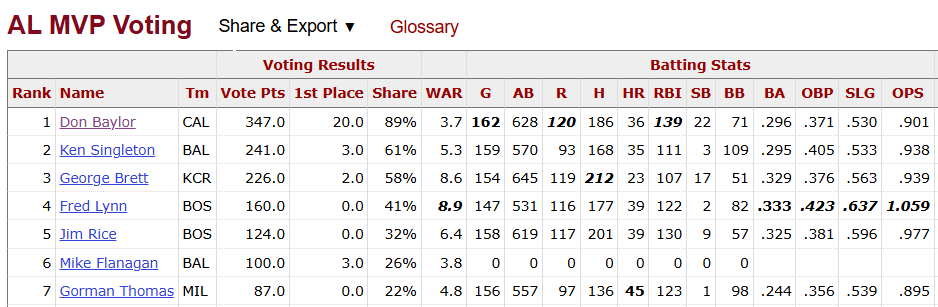
Don Baylor won the MVP with a 3.7 WAR. Yes, you read that right, but WAR was not even a glimmer in Bill James’ eye at that point. Baylor also led the league in runs scored and RBIs. Fred Lynn not only led the league in WAR, BA, OBP, SLG, and OPS, he won a gold glove as well. This was an historic season by an all-around great player, and he finished fourth. But back in those days, it was all about home runs and RBIs.
So back to the original question, how much should we value RBIs? I will start with this. Here are the all-time MLB leaders in RBIs:
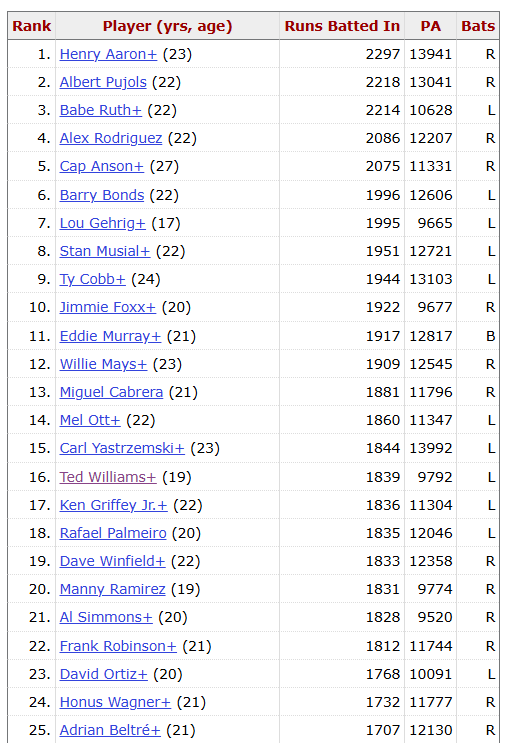
See any good hitters on that list? While RBIs are probably not a good measure of performance relative to other statistics, great hitters drive in a lot of runs. Period. Great hitters make the most of their plate appearances, especially with men on base. Clutch exists, just ask Red Sox fans who watched David Ortiz drive in runs at the most opportune moments across three championships. So, I will continue to value RBIs, even if the nerds tell me not to.
Even in a sport with granular statistics, as baseball certainly thrives on, sometimes these statistics can operate at cross purposes with each other. RBI and OBP is a primary example. Is your job to drive home runs or to get on base? It's both, but situations occur where it's one more than the other. So it's easier to improve on your OBP with runners on base than it is your RBI total. Or rather, the way the pitcher pitches you favors improving on your OBP. That's because the pitcher doesn't mind walking you. Therefore you will see fewer pitches to drive in runs with. But the good run producers don't accept this seemingly benign trade-off. They're more interested in doing the harder thing, which is driving in the run. The WAR statistic is totally ignorant of this and must be condemned as such.
I agree, RBI are a reflection of delivering in the clutch.